Robot rental for business
Renting means taking a robot for as long as the task lasts and paying for the period of work instead of tying up money upfront. Below we break the deal down part by part: how long robots are taken for, what the rate covers, what we need from you, who is responsible for the machine and what happens after the rental. The rate depends on the model and the term, so the price is on request.
How renting a robot works
Nine questions people usually ask before signing. Where the answer depends on the model and the site, we say so instead of quoting an average figure.
What robot rental is
You take a robot for as long as the task lasts and pay for the period of work rather than buying the machine. The robot stays ours: we deliver it, set it up for your task and collect it when the term ends.
How long robots are rented for
The term follows the task: a one-off event, a seasonal peak, a pilot on a single line before a purchase. The minimum term depends on the model; we name it in the quote and fix it in the contract.
What the rental includes
We deliver the robot, configure and launch it for your task, show your team how to work with it and stay available for service throughout the term. Anything billed separately is spelled out in the quote before the contract, not in an invoice afterwards.
Who operates the robot
It depends on the model. Some robots run factory scenarios and teleoperation, some versions (usually marked EDU) can be programmed for your task. We state the level of autonomy right on the model page so you do not expect independence from a base version. A dedicated operator for the whole day comes with events, which is a separate format: robot rental for an event.
How long a robot actually works per shift
Not around the clock, and we say so before the deal. Promo robots hold out for roughly 1 to 1.5 hours and then go to charge, so on a long event we plan the breaks in advance. Service models for a floor or a warehouse run longer, on the order of 13 hours a day, and need daily upkeep. Figures for your model come with the quote.
What we need from you
The task, the site and the term. Before delivery we run a pre-audit of the premises: thresholds, aisle width, lifts, floor surface, Wi-Fi. A 2 mm threshold stops a heavy machine, and dark matte floors are harder for a robot to see, so we check this before you pay. The paperwork and payment order are fixed in the contract.
Who is responsible if the robot breaks down
We stay available for service for the whole rental term and work through issues with you. What happens in case of a breakdown and where each side's responsibility ends are written into the contract for the specific model and site.
What happens after the rental
If the task does not prove out, you return the robot and lose only the payment for the period. If it does, you move on to a purchase or leasing of the same model, with terms calculated separately.
How much rental costs
The rate is calculated for the model, the term and the task, so we quote on request rather than pull an average figure out of the air. The quote shows what the rate covers and what is billed separately.
How to rent a robot
Six steps from request to return. Selection, the site check and the launch are on us.
- 1
Request and quote
Describe the task, the site and the term. We pick the model and calculate rental terms for your case, without average numbers from a price list.
- 2
Site check
Before delivery we check whether the robot can actually move around your site: thresholds, aisle width, lifts, floor surface, Wi-Fi. That way you do not pay for a robot that cannot reach the working area.
- 3
Contract
We fix the term, the scope of the service and the payment order. What the rate covers and what is separate is visible before signing.
- 4
Delivery, setup and launch
We bring the robot, assemble it, configure it for the task and show your team how to work with it.
- 5
Operation and support
The robot does the job and we stay available for service for the whole rental term.
- 6
Return or move to a purchase
We collect the robot when the term ends. If the task proved out, you move on to a purchase or leasing of the same model.
Rental or leasing: what is the difference
The two formats are often confused, although they solve different problems. Any item in the catalog can be taken in any of the three formats, so the model does not limit your choice.
Rental
You take the robot for a term, pay for the period of work and return it at the end. The robot stays ours and does not go on your balance sheet. It fits when the task is one-off, seasonal or not yet proven.
Leasing
You pay in instalments on a schedule, the machine works at your site from day one, and at the end the robot becomes yours. The asset goes on your balance sheet. It fits when the task is permanent but a large upfront sum is not available.
More about leasingIf the task is permanent and the money is there upfront, see the purchase terms.
When to rent and when to buy
Renting lowers the cost of being wrong: you test the payoff on your own task before large spending. But it is not always cheaper, and here is the honest line.
Rent when
- A pilot on one line, site or location before a purchase
- A seasonal peak without inflating headcount: unlike a person, a robot cannot be laid off for six months
- A one-off event, trade show or promo: there is a separate page about robot rental for an event
- The task exists, but the payback for your case has not been calculated yet
You already need a purchase or leasing
- If the task is permanent and the load is full, paying per period costs more than owning
- The robot is built into the process rather than testing a hypothesis
- You need the asset on your balance sheet
What usually stops people, and how renting answers it
Only what renting genuinely closes, without promises out of thin air.
What if I buy it and it never pays off
There is no single payback period; across the market it ranges from a few months to a few years. We will not invent a figure: we calculate it for your inputs, and what you verify is not the calculation but the robot working on your task.
I am paying a triple markup for a box
With a rental you are not buying hardware and not paying for a box. You pay for days of work on terms that are visible before the contract.
It is an expensive toy, all show and no use
We will not argue about it in words. Rent the robot and test it on a real task: you pay for a period, not for a promise, and you decide for yourself whether it delivers.
We are not ready to replace people, staff are against it
We sell augmentation, not replacement. The robot takes the monotonous and heavy work, people stay on control and non-standard cases. A rental shows this without putting jobs at risk.
Show us where it already works
Our confirmed cases are event-based so far: 6 events with real names and photos. In industry and HoReCa there are few references, and that is the honest picture of a young market. That is exactly why we offer rental: not to take our word for it, but to check it on your own task.
Ready to test a robot on your own task?
Get a rental quoteRobots available for rent
Here are the eight models people ask about most often, led by the Unitree G1 humanoid and the Unitree Go2 robot dog. Any item in the catalog is available for rent, price on request.
- Unitree

Unitree G1 robot
General-purpose humanoid robot with AI
Price on requestDetails - Unitree
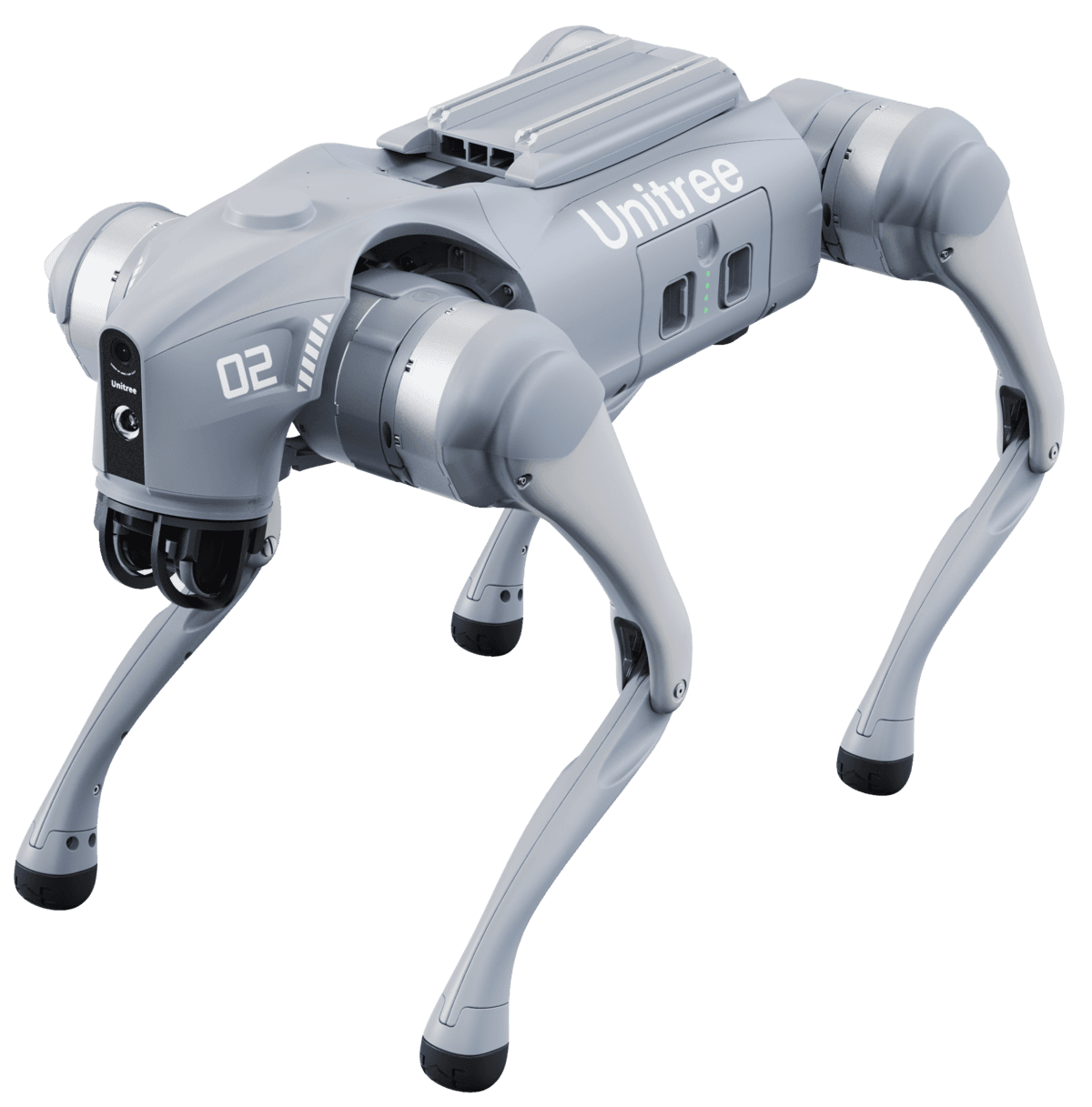
Unitree Go2 robot
Mobile platform for research
Price on requestDetails - Unitree
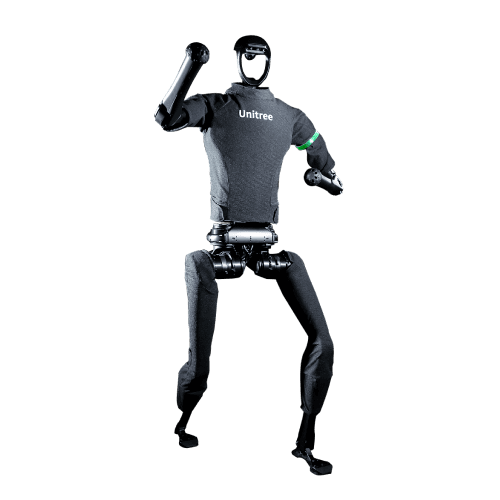
Unitree H1 robot
Full-size humanoid with a record walking speed of 3.3 m/s
Price on requestDetails - Unitree

Unitree B2 robot
Efficient and ultra-stable industrial robot
Price on requestDetails - Unitree

Unitree A2 Pro robot
Quadruped platform for navigation, education, research, and prototyping
Price on requestDetails - Agibot

Agibot X2 robot
A compact humanoid for service and exhibition work
Price on requestDetails - Pudu Robotics
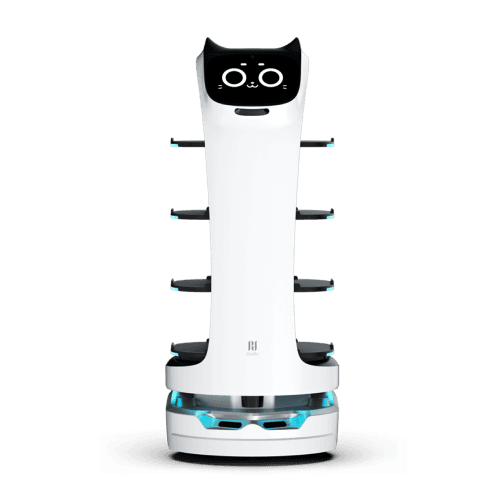
Pudu BellaBot Basic robot
Intelligent waiter robot
Price on requestDetails - DEEPRobotics
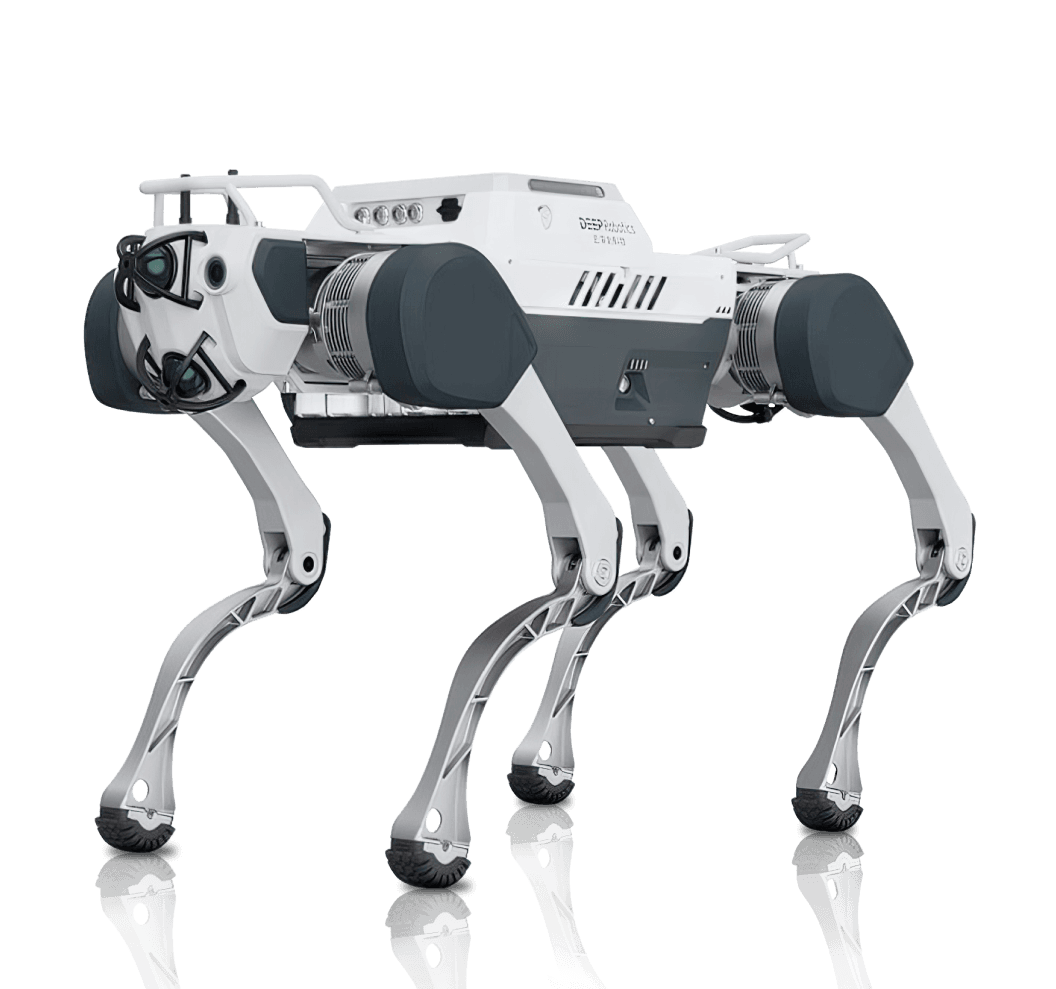
DEEPRobotics X30 robot
Industrial inspection robot for harsh environments
Price on requestDetails
Describe the task, the site and the term. We will pick a model, calculate rental terms for your case and tell you what the rate covers and what is billed separately. Price on request.
Get a rental quote
[ purchase // rental // leasing ]